
Musty Smell in Books: 2026 Archival Deodorization Guide
"Microbial proliferation and the resultant volatile emissions represent an immediate threat to cultural heritage. Modern conservation standards mandate phasing out toxic chemical fumigants in favor of thermodynamic phase-change inactivation and closed-loop gas oxidation."
— International Federation of Library Associations and Institutions (IFLA) Guidelines
For library directors, curators, and institutional archivists, persistent damp odors across high-density stacks represent an active biological warning sign. When collection microclimates exceed 65% relative humidity (RH), dormant spores of Aspergillus and Penicillium germinate, releasing volatile organic compounds (mVOCs) such as 1-octen-3-ol. Simultaneously, acid hydrolysis breaks down cellulose fibers into furfural and acetic acid.
Resolving themusty smell in booksacross permanent collections requires methodical, non-destructive workflows. This guide outlines practical, institutional protocols forarchival book deodorizationand non-chemicalmold odor removal.
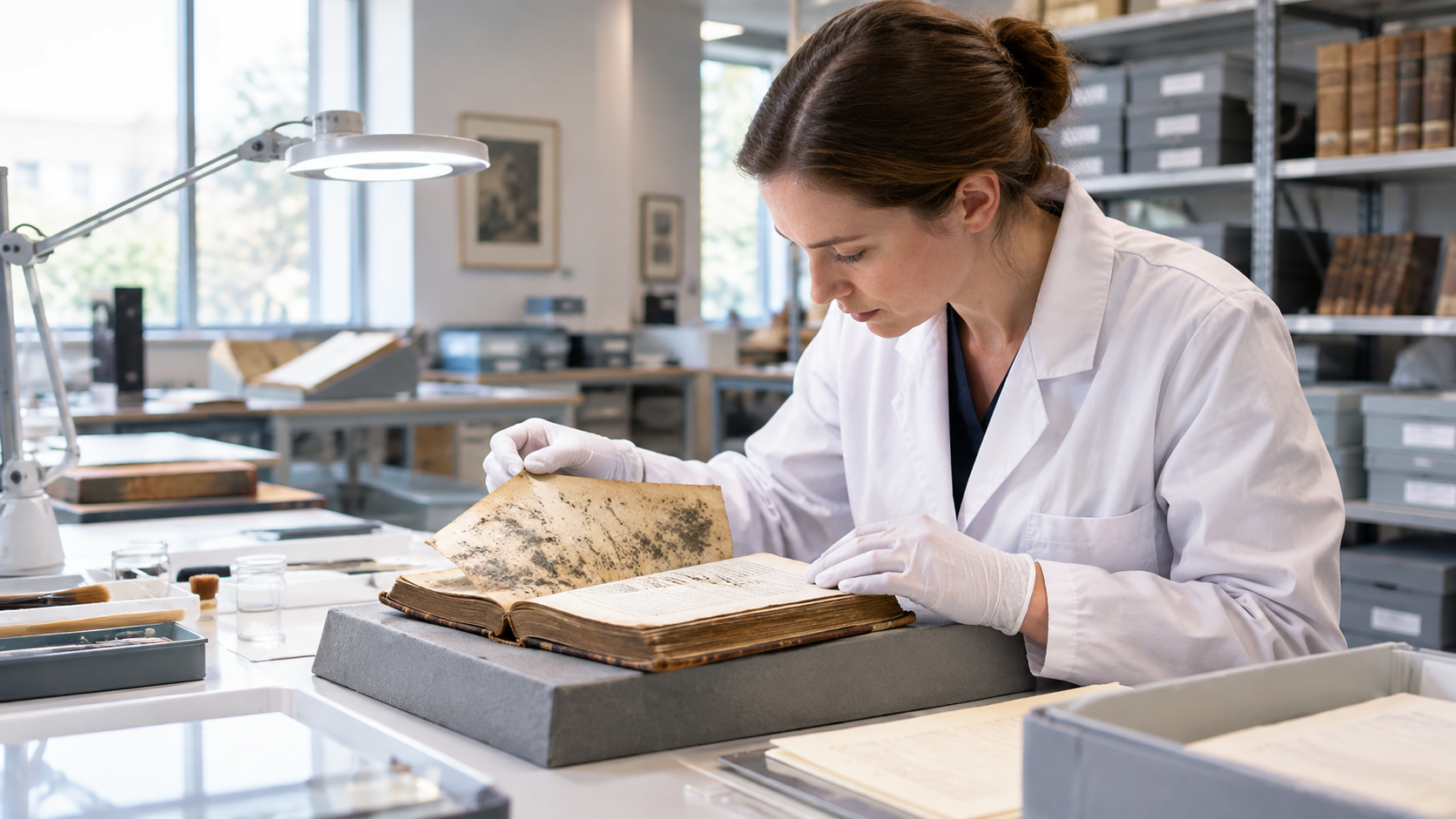
Institutional Triage: Can You Deodorize Collections In-House?
Direct Answer: Yes, but your approach must match the condition of the material.
Dry, stable volumes showing minor off-gassing qualify for controlled in-house vapor adsorption. However, wet materials, actively sporulating colonies, or aggregated "book bricks" require immediate biocidal containment. Applying liquid chemicals or domestic masking sprays directly to degraded leaves violates conservation ethics, dissolves historic sizing, and tears fragile fibers.
When collections face severe bio-infestation, facilities must deployinstitutional mold remediation for booksusing sub-zero cryogenic systems and atmospheric plasma-ozone oxidation.
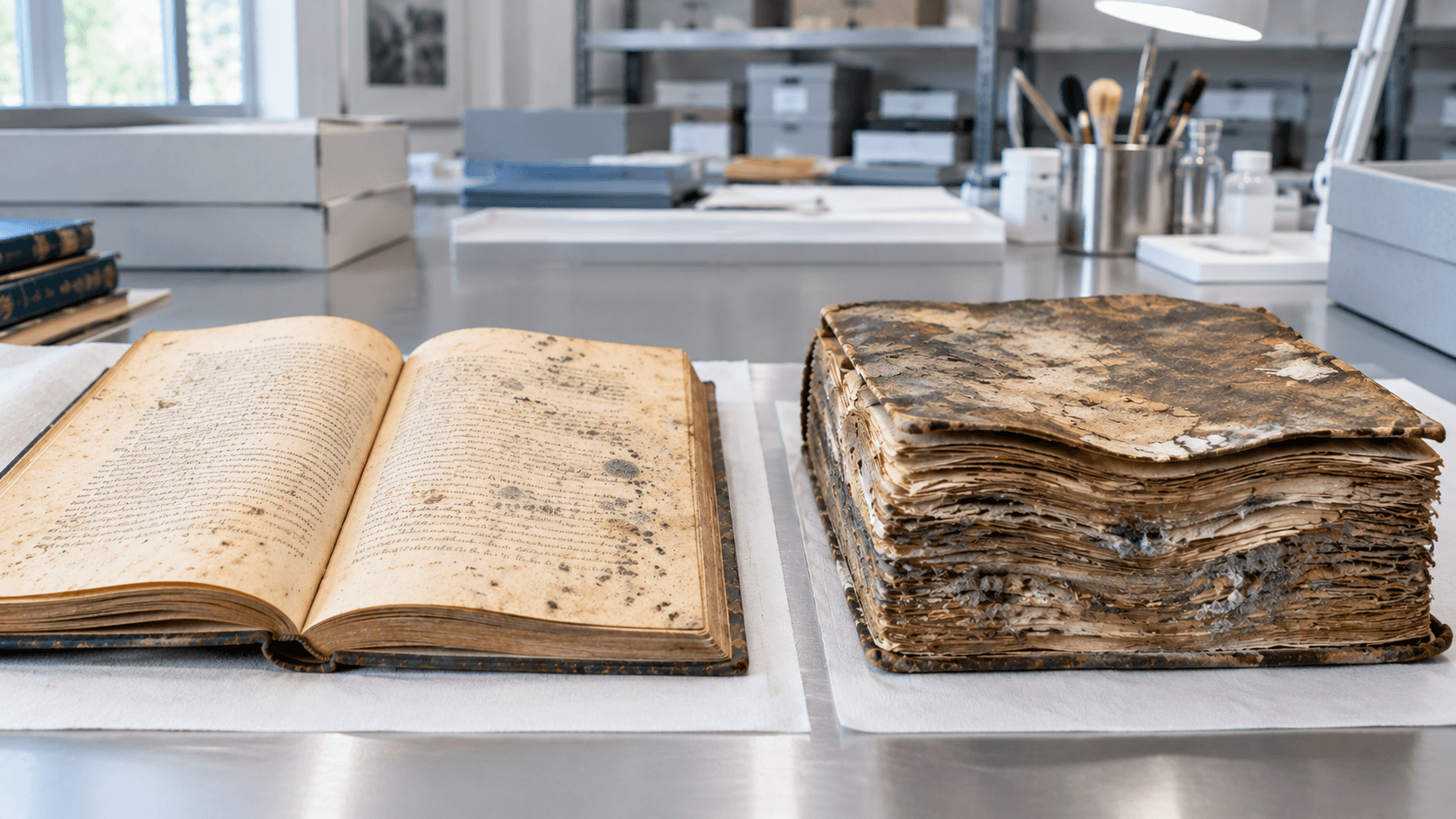
Pre-Treatment: How to Dry Damp Musty Books Safely
Free moisture drives fungal growth. Attempting odor removal on damp leaves accelerates paper cockling and mold spread. Conservators mustdry damp musty books safelybefore introducing deodorization media:
Vertical Evaporation Setup:Stand volumes upright on their heads or tails across clean, unbuffered blotter paper sheets. Gently fan out the leaves to a 45-degree angle.
Indirect Air Displacement:Direct low-velocity room fans toward adjoining walls to create gentle ambient cross-circulation. Never blow air directly at wet page margins.
Target Climate Thresholds:Maintain the drying area between 18°C and 20°C with ambient relative humidity held strictly between 35% and 45% RH.
Interleaving Protocol:For waterlogged leaves, interleave unprinted, acid-free blotter paper every 20 pages. Replace damp interleaving sheets every 2 to 3 hours.
Step-by-Step Guide: How to Remove Mold Odor from Books
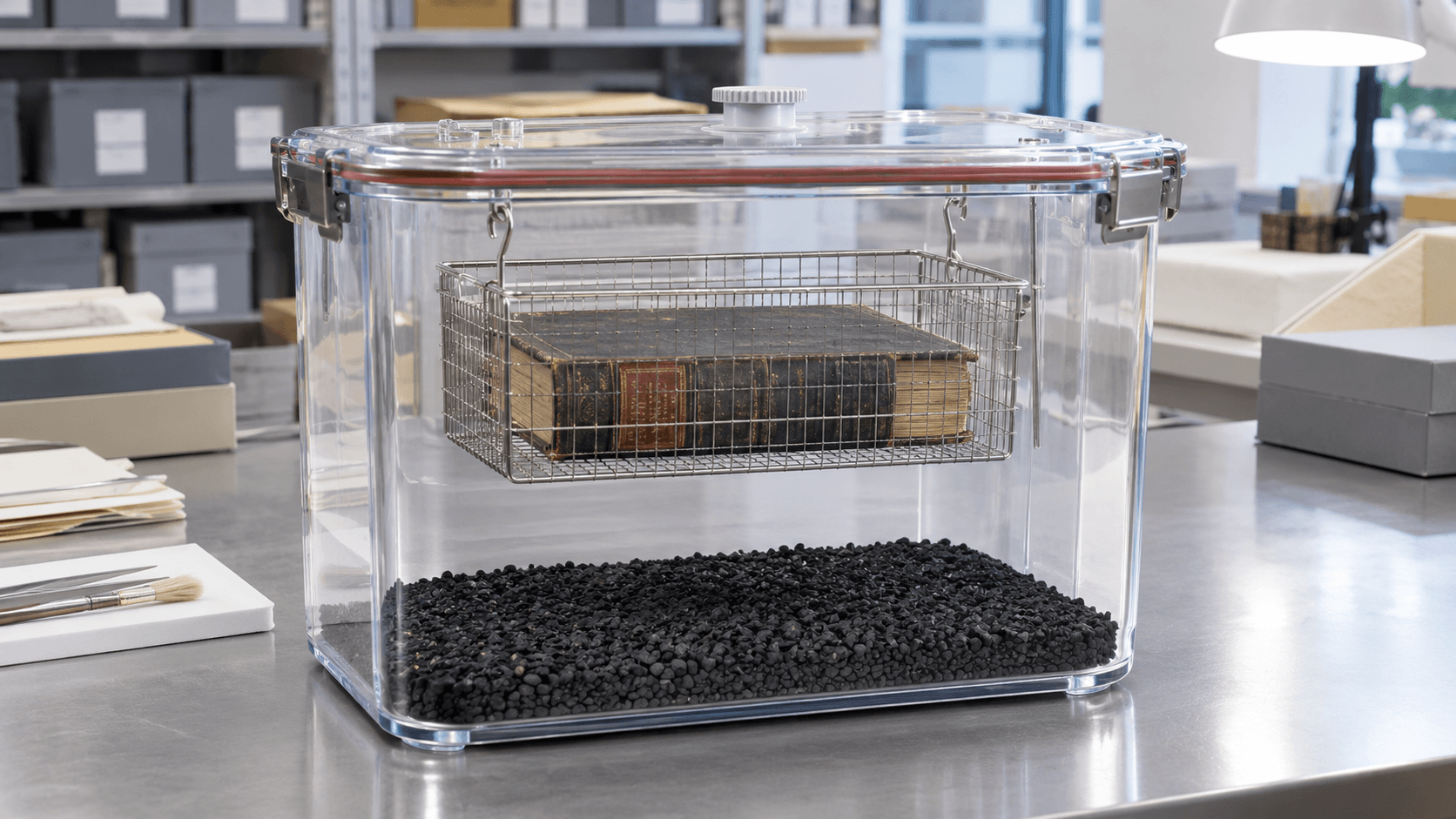
For stable items with residual odors, conservators use a two-tier dual-chamber vapor-phase adsorption system that prevents physical contact between paper and chemical agents.
Step 1 – Select Safe Book Odor Absorbers
Never allow loose powders to contact historical volumes. Choose non-dusting safebook odor absorbers:
Pelletized Virgin Activated Carbon:Specific surface area >1,000 m²/g; captures low-molecular-weight organic vapors without generating fine carbon dust.
Clinoptilolite Zeolite Molecular Sieves:Natural crystalline aluminosilicate lattices that capture polar acidic compounds.
Indirect Sodium Bicarbonate:Kept strictly isolated in separate open dishes; never dusted onto pages.
Step 2 – Enclosure Assembly
Pour a 3-centimeter layer of pelletized activated charcoal evenly across the floor of an airtight polypropylene container. Position an inner perforated stainless steel basket directly above the adsorbent bed, ensuring books remain suspended at least 5 centimeters above the carbon granules.
Step 3 – Aerated Book Placement
Place dry volumes upright in the inner basket. Gently open and fan out the leaves to maximize air exchange through the margins and gutter.
Step 4 – Monitored Incubation
Seal the outer container airtight. Store the chamber in darkness at 18°C–21°C. Inspect the enclosure every 72 hours. Standard vapor extraction requires 7 to 14 days.
Mass Remediation Procurement: Freezing vs. Plasma Ozone
When thousands of accessioned volumes require rapid salvage, manual dual-chamber tubs become operationally impractical. Modern institutions rely on automated engineering systems:
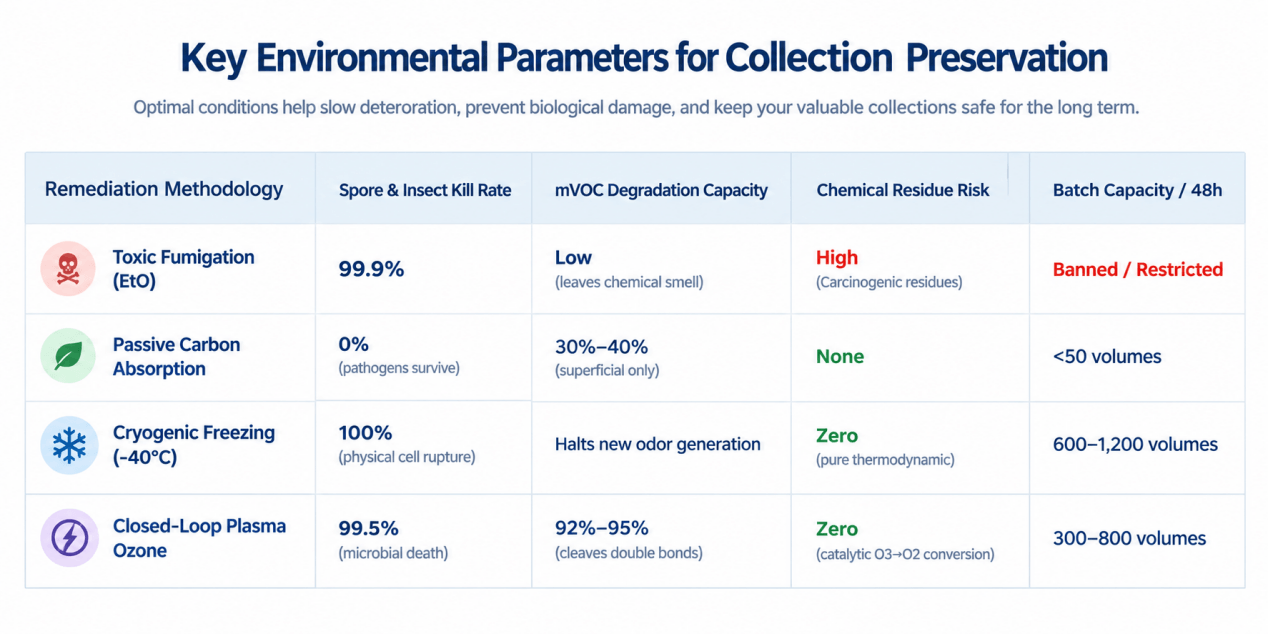
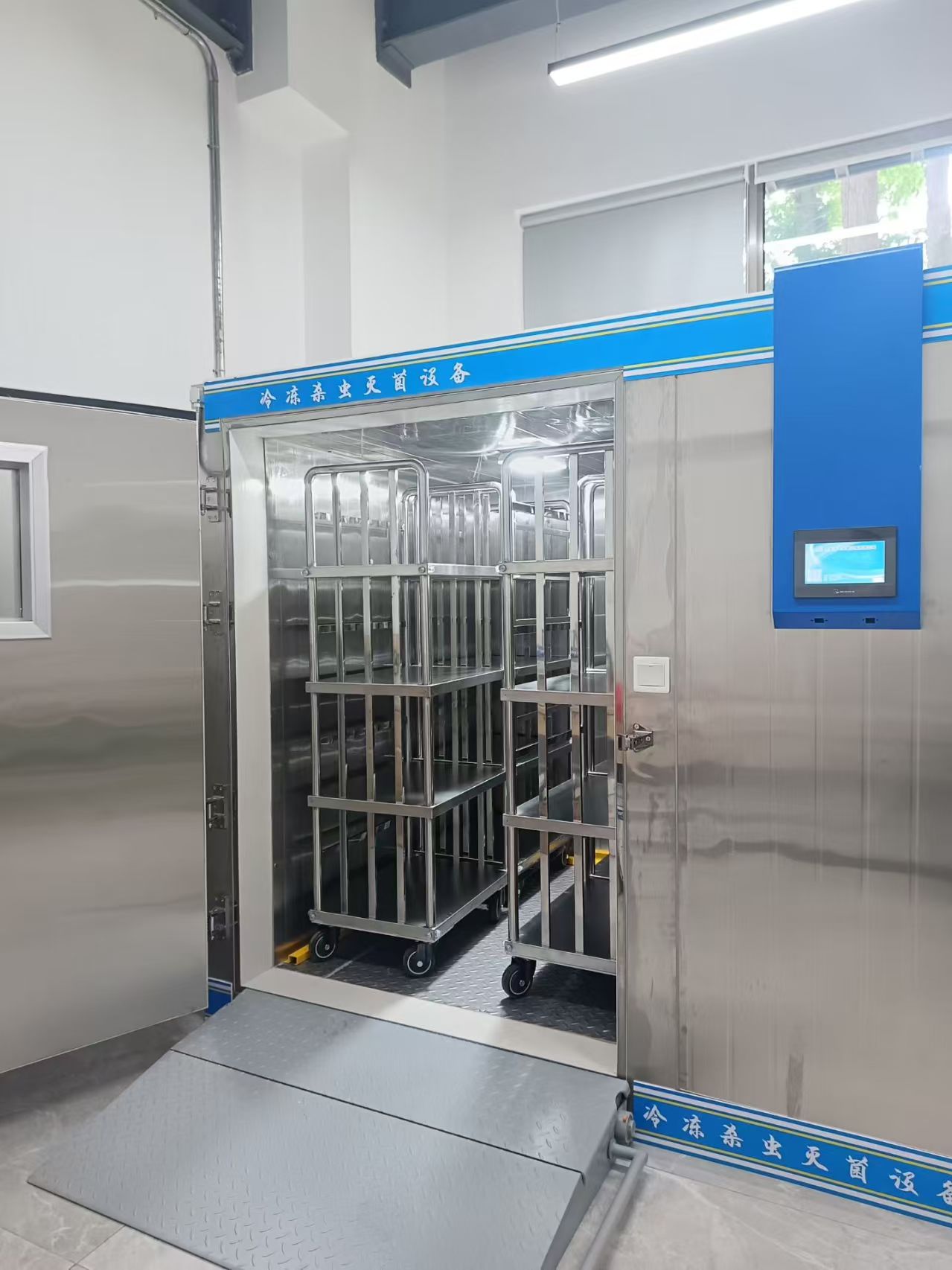
Deployment of a Cryogenic Freezing Chamber for Books
A commercialcryogenic freezing chamber for books provides thermal biocidal action without chemical solvents:
Pull-Down Velocity: Drops temperature to -35°C to -40°C within 120 minutes.
Thermodynamic Kill:Sustaining -40°C for 48 hours shatters fungal cell membranes and terminates insect life stages.
Condensation-Free Recovery: Integrated dual-stage refrigeration heating warms collections past 0°C while holding internal humidity at 45% to 65% RH, preventing water droplet condensation on ink.
Treatment in a Plasma Ozone Chamber for Books
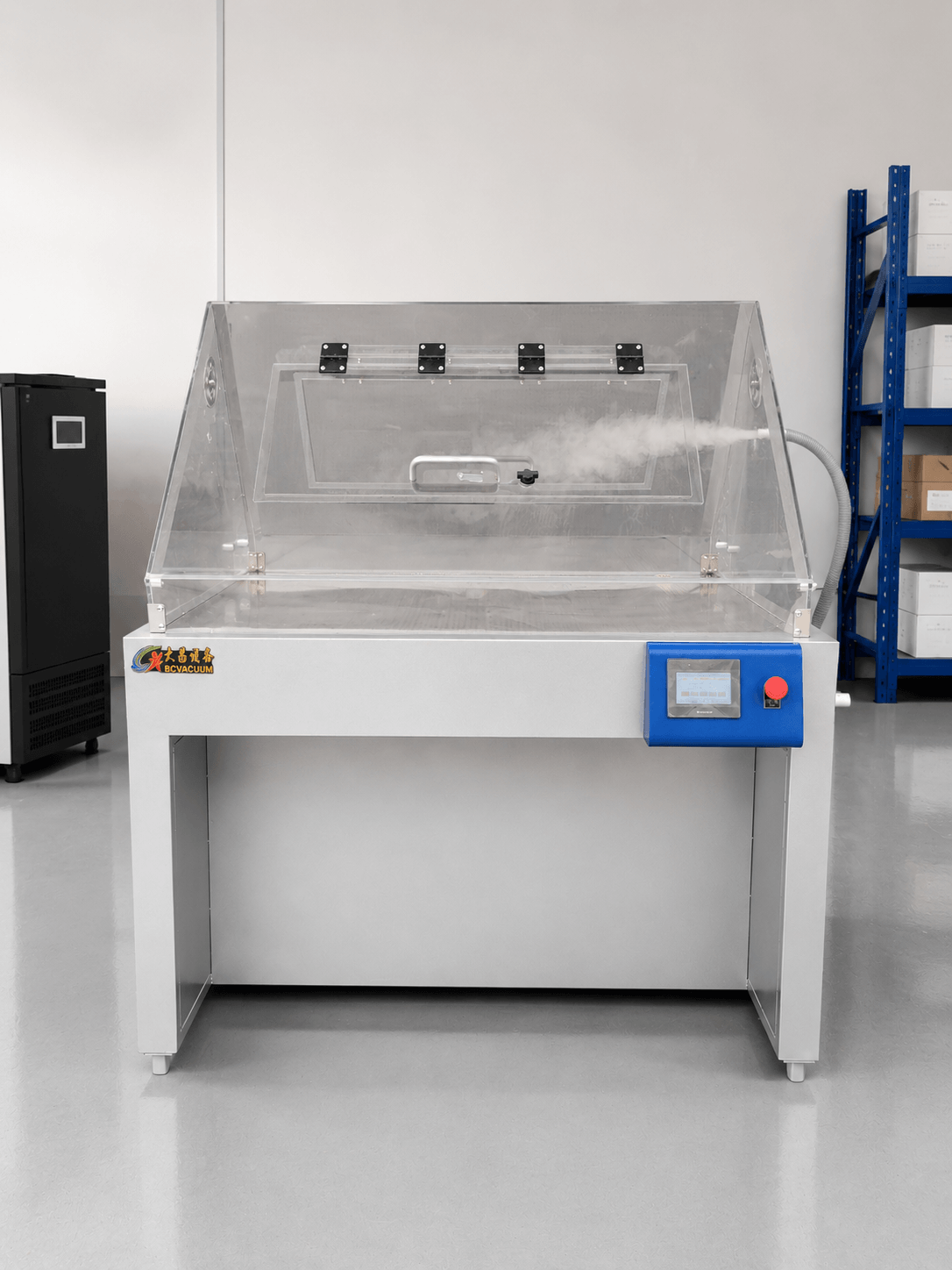
For persistent mVOCs bound to gelatin sizing, loading items into aplasma ozone chamber for books achieves chemical decomposition:
Atmospheric dielectric barrier discharge produces non-thermal plasma and controlled ozone (O₃).
·Ozone radicals diffuse across text blocks, cleaving unsaturated bonds in 1-octen-3-ol and geosmin, converting them into odorlessCO₂and H₂O.
Internal catalytic scrubbers convert residual O₃back to pure O₂ before unsealing, guaranteeing an emission-free work environment (<0.05 ppm).
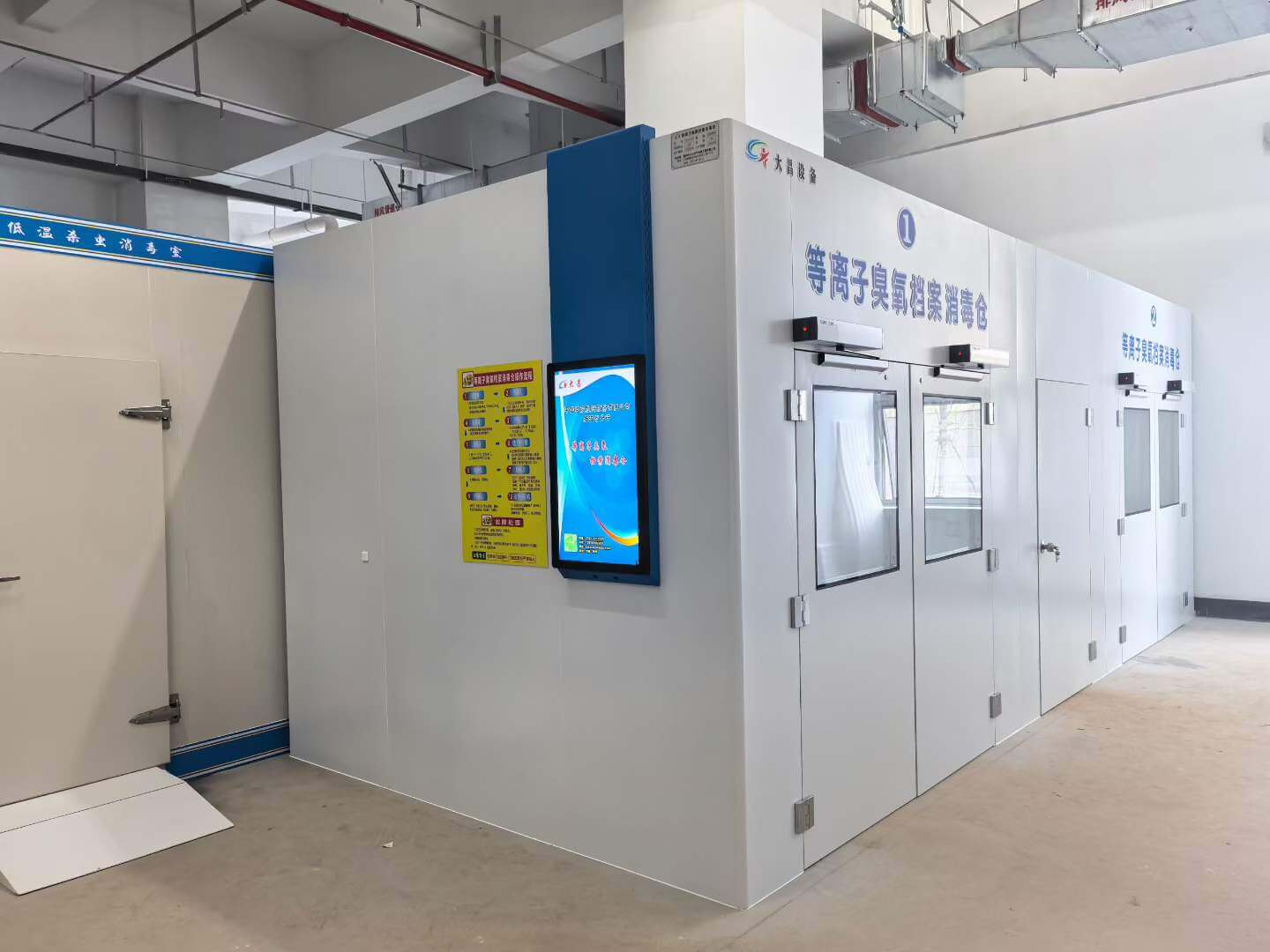
Case Study: Step-by-Step Recovery of 5,000 Water-Damaged Volumes
In a university rare book collection, an overhead pipe rupture soaked 5,200 cataloged 19th-century books. The stack environment hit 24.5°C and 78% RH within 36 hours. Active colonies of Aspergillus spread across gutter margins, emitting strong mVOC vapors. The preservation team resolved the incident using a clear, phased protocol.
Phase 1: Intake, Triage, and Emergency Stabilization
Immediate Intake and Sorting: Technicians moved the books into a temporary staging room kept at 12°C and 40% RH to slow mold metabolism.
Condition Labeling: Staff sorted volumes into three color-coded streams:
Green Tag: Structurally dry with surface odors only.
Yellow Tag: Damp covers and margins (14%–18% moisture).
Red Tag: Waterlogged leaves and compressed book bricks.
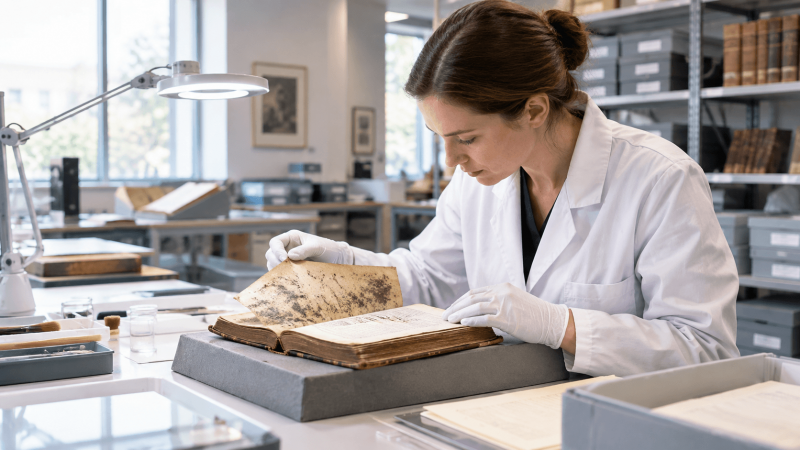
Mechanical Dry Cleaning: Yellow and green-tagged volumes were cleaned under negative-pressure suction hoods. Technicians brushed loose powdery spores off exterior edges using soft goat-hair brushes into HEPA-filtered vacuum inlets.
Phase 2: Cryogenic Thermal Disinfection and Controlled Thawing
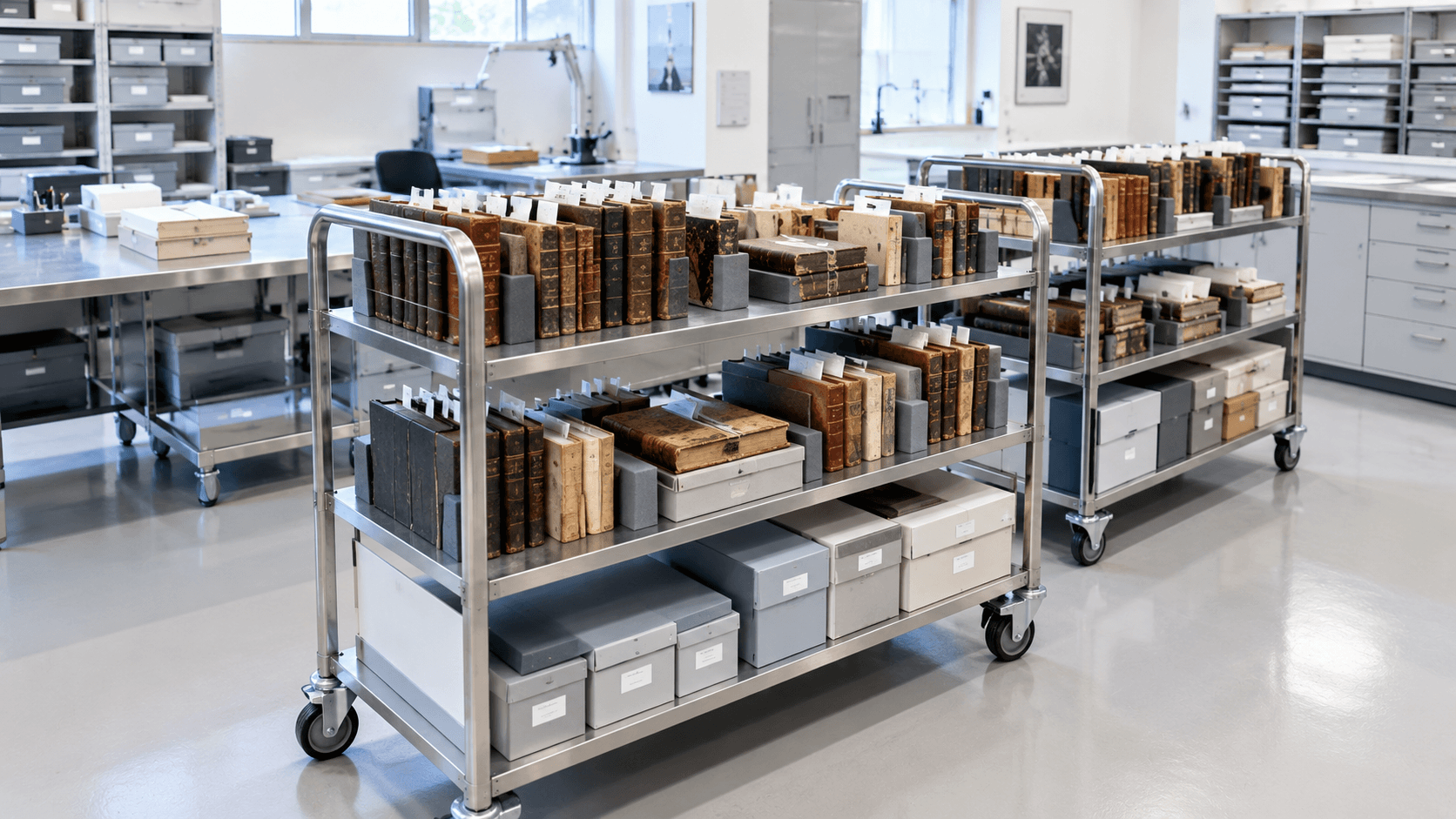
Batch Loading: Saturated volumes were packed into perforated aluminum transport trolleys in spine-down orientations.
Cryogenic Shock: Trolleys entered the walk-in cryogenic freezing chamber for books in 1,000-volume batches. The system pulled temperatures down to -40°C in 110 minutes, maintaining -40°C continuously for 48 hours to shatter fungal cell membranes.
Condensation-Free Thaw: The chamber engaged automated ramp-up heating while running secondary dehumidifiers. Internal relative humidity remained under 50% RH while temperatures crossed 0°C, preventing condensation on historic iron gall inks.
Phase 3: Plasma Ozone Deodorization
Gas Treatment Run: Thawed and dried volumes moved to the plasma ozone chamber for books.
Pulsed Oxidation: The system injected a controlled 20 ppm ozone cycle for 90 minutes. Ozone gas penetrated between leaves, oxidizing 1-octen-3-ol and acidic vapors into inert compounds.
Catalytic Purge: Manganese dioxide scrubbers recirculated chamber air for 30 minutes, bringing residual ozone levels below 0.02 ppm before technicians opened the doors.
Phase 4: Post-Treatment Quality Control and Reshelving
ATP Bioluminescence Verification: Technicians swabbed gutter margins across random sample sets. Swabs registered below 15 Relative Light Units (RLU), confirming full biological clearance (baseline was ).
Physical Integrity Checks:Conservators tested fold endurance on sacrificial sample sheets; results matched pre-incident mechanical baselines.
Controlled Stack Reintegration: Cleared volumes were placed into unbuffered archival phase boxes and returned to permanent stacks maintained at 18°C and 45% RH. The entire 5,200-volume recovery was completed within 24 working days.
Common Pitfalls in Archival Odor Removal
Archival standards prohibit the following treatments due to irreversible cellulose damage:
Direct Application of Baking Soda:Abrasive alkaline particles become entrapped in fibers, causing mechanical micro-tearing and altering the paper's surface pH.
Microwave or Convection Heating:Rapid thermal expansion flashes moisture into high-pressure steam, warping binder boards and delaminating animal hide glues.
Direct UV-C Radiation Exits:Solar or artificial UV radiation triggers photochemical scission of cellulose polymers, accelerating paper yellowing and ink bleaching.
Aerosol Masking Sprays:Synthetic fragranced sprays deposit oil droplets on paper, attracting dust and creating greasy tide-lines.
Frequently Asked Questions (FAQ)
Can vinegar or alcohol sprays eliminate mold odor from rare books?
Never apply liquid vinegar, rubbing alcohol, or surface disinfectants directly to archival paper. Acetic acid hydrolyzes historic cellulose chains, while alcohol-based solvents dissolve natural gelatin sizing, strip leather oils, and cause irreversible ink bleeding. Only non-contact gas-phase processes like plasma ozone chamber for books or solid-state adsorption safely deodorize collections.
Will sub-zero cryogenic treatment weaken historic paper tensile strength?
No. Empirical studies confirm that rapid pull-down freezing to -40°C forms uniform micro-crystals rather than jagged ice structures. Controlled step-thawing with active dehumidification prevents condensation droplets on pages. Tensile and MIT folding tests confirm that paper fiber flexibility and ink stability remain completely unaffected.
How long does a full institutional remediation cycle take for 1,000 books?
A complete cycle typically spans 4 to 5 operational days. The cryogenic freezing phase requires 120 minutes of pull-down followed by a 48-hour continuous thermal soak and a 12-hour dehumidified thaw. Subsequent gas-phase plasma ozone exposure and catalytic purge require approximately 2 to 3 hours per batch.
Upgrade Your Archival Disaster Recovery Infrastructure
Facing an active fungal outbreak, water-damaged acquisitions, or persistent mVOC odor across your library repository? Relying on domestic adsorbents delays necessary intervention and risks irreversible collection loss.
Dachang engineers industrialcryogenic freezing chamber for booksand catalytic plasmaozone chamber for bookstailored to international museum standards (EN 16893 & IFLA guidelines).
Request a Facility Assessment:Speak directly with our technical preservation engineers to evaluate stack airflow and batch salvage requirements.
Custom Chamber Specifications:Get comprehensive CAD footprints, cryogenic pull-down curves, and procurement-ready tender documentation.
[Contact Our Conservation Engineering Team] | [Request Technical Specifications & Quotation]
Curated Technical References & Standards
EN 16893:2018:Conservation of Cultural Heritage – Specifications for location, construction and modification of buildings or rooms intended for the storage or use of heritage collections.
International Federation of Library Associations and Institutions (IFLA): Care, Handling and Storage of Rare Books and Archival Documents.
Northeast Document Conservation Center (NEDCC):Preservation Leaflet 3.8: Emergency Salvage of Moldy Books and Paper.
Canadian Conservation Institute (CCI):Technical Bulletin 26: Mold Prevention and Collection Recovery in Heritage Collections.
American Institute for Conservation (AIC):Code of Ethics and Guidelines for Practice.
ISO 11799:2015:Information and documentation — Document storage requirements for archive and library materials.
Original link: https://www.dachangequip.com/news/archival-book-deodorization-guide.html
Note: The copyright belongs to Ganzhou Dachang Air Conditioning Equipment Engineering Co., Ltd. For commercial reprints, please contact the author for authorization. For non-commercial reprints, please indicate the source.
Related Recommendations
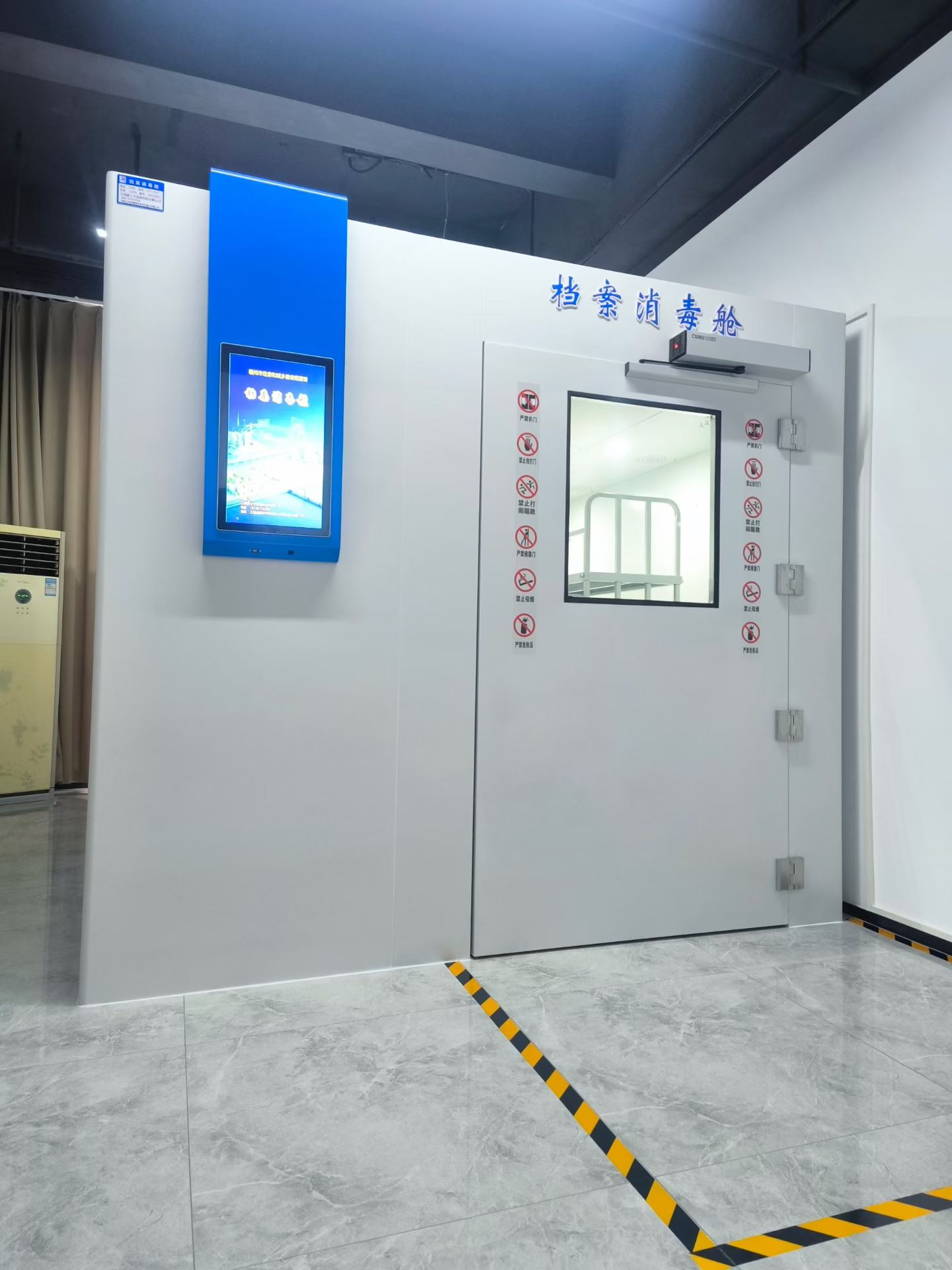
Information on file disinfection machine

Add WeChat
Main products :Vacuum Cooler,Archive Sterilization Equipment,Freeze Dryer,Thawing Machine,Heritage Restoration Equipment,Low Oxygen Atmosphere Sterilizer,Vacuum Odor Remover,Dust & Disinfection Purifier
Copyright © 2026 Dachang Equipment Equipment All rights reserved. XML
XML