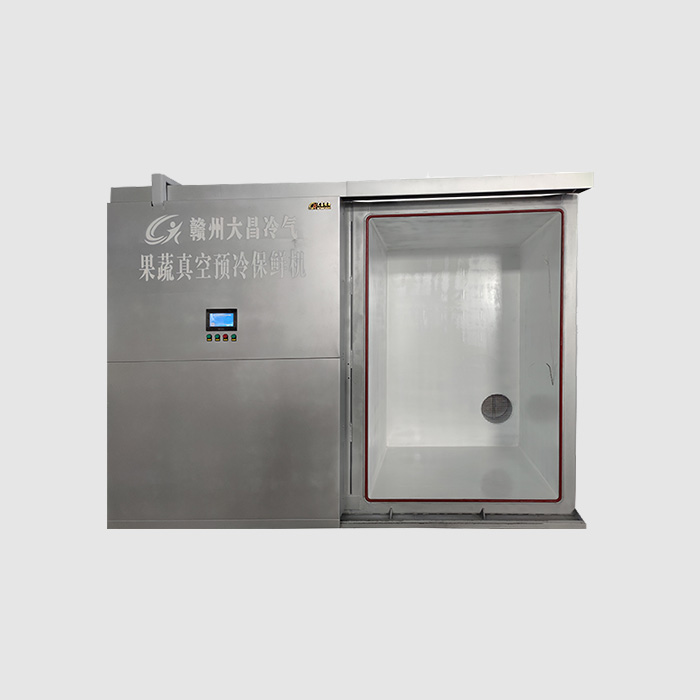
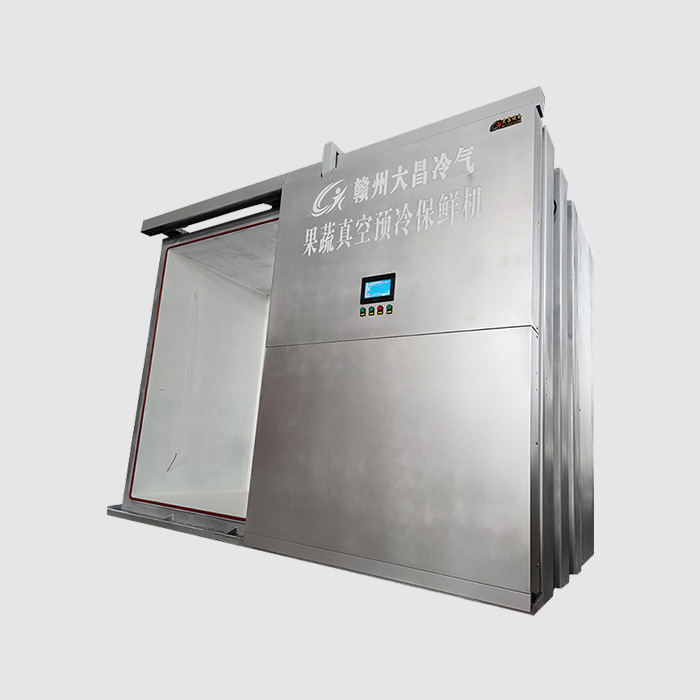
Leafy vegetable vacuum pre cooler is a machine specifically designed for preserving leafy vegetables. It slows down the metabolic rate of leafy vegetables and extends their shelf life by placing them in a vacuum environment, reducing the ambient temperature and gas concentration. This machine is widely used in vegetable processing, logistics and other fields, which can effectively improve the preservation effect of leafy vegetables, reduce losses, and improve economic benefits.
Features
The main functional characteristics of the leafy vegetable vacuum pre cooler are:
1. Rapid cooling: By placing leafy vegetables in a vacuum environment, the ambient temperature can be quickly lowered, resulting in a rapid decrease in the temperature of the leafy vegetables and effectively extending their shelf life.
2. Maintain original quality: The vacuum pre cooler can preserve the original quality of leafy vegetables, including color, taste, nutritional content, etc., keeping them fresh during the shelf life.
3. Energy saving and environmental protection: The working principle of a vacuum precooler is to use vacuum to reduce the ambient temperature, without consuming a large amount of energy and without generating pollution, which has the characteristics of energy saving and environmental protection.
4. High degree of automation: The leafy vegetable vacuum pre cooler can achieve automated operations, including automatic weighing, automatic loading and unloading, automatic control, etc., improving work efficiency and production efficiency.
Scope of application
Vacuum pre cooling of leafy vegetables refers to placing fresh leafy vegetables in a vacuum environment for pre cooling treatment to extend their shelf life. Vacuum pre cooling treatment suitable for leafy vegetables includes spinach, rapeseed, celery, Chinese cabbage, etc. Through vacuum pre cooling treatment, the decay and browning of leafy vegetables can be effectively reduced, while maintaining their freshness and nutritional value.
Pre cooling principle and process
The pre cooling process and working principle of the leafy vegetable vacuum pre cooler are as follows:
1. Pre cooling process: Firstly, fresh leafy vegetables are placed in a vacuum chamber, the door of the vacuum chamber is closed, and then the vacuum pump is started to exhaust the air inside the vacuum chamber, reducing the air pressure inside the vacuum chamber. As the air pressure decreases, the ambient temperature also decreases, resulting in a decrease in the temperature of leafy vegetables.
2. Working principle: The working principle of the leafy vegetable vacuum pre cooler is to use vacuum to reduce the ambient temperature. The vacuum pump exhausts the air inside the vacuum chamber, reducing the air pressure and thus lowering the ambient temperature. Due to the temperature difference between the leafy vegetables and the ambient temperature, heat is transferred from the leafy vegetables to the environment, resulting in a decrease in the temperature of the leafy vegetables. In the vacuum chamber, it is also possible to further reduce the ambient temperature by adding coolant or cooling water, thereby causing the temperature of leafy vegetables to drop faster.
3. Pre cooling completed: When the temperature of the leafy vegetables drops to the desired level, the door of the vacuum chamber can be opened to remove the leafy vegetables, and then they can be packaged and stored.
Precautions and equipment maintenance
The precautions and equipment maintenance of the vacuum pre cooling machine for leafy vegetables include the following points:
1. Operators need to undergo professional training to master the operation methods and precautions of the equipment.
2. The equipment needs to be inspected before use to ensure that all components of the equipment are intact and undamaged.
3. During use, it is necessary to pay attention to changes in parameters such as temperature and pressure of the equipment and make timely adjustments.
4. After use, the equipment needs to be cleaned and maintained in a timely manner to keep it clean and in good condition.
5. The equipment needs to be regularly inspected and maintained to ensure its normal operation and service life.



 XML
XML