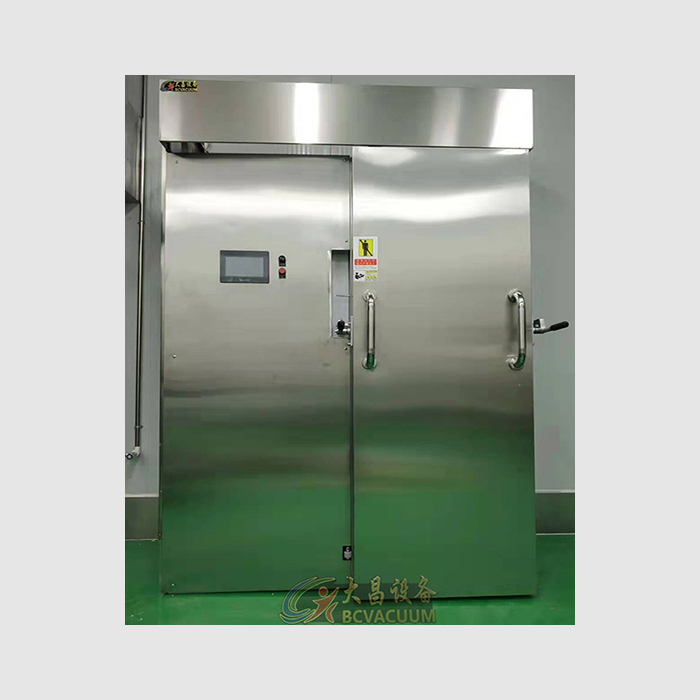
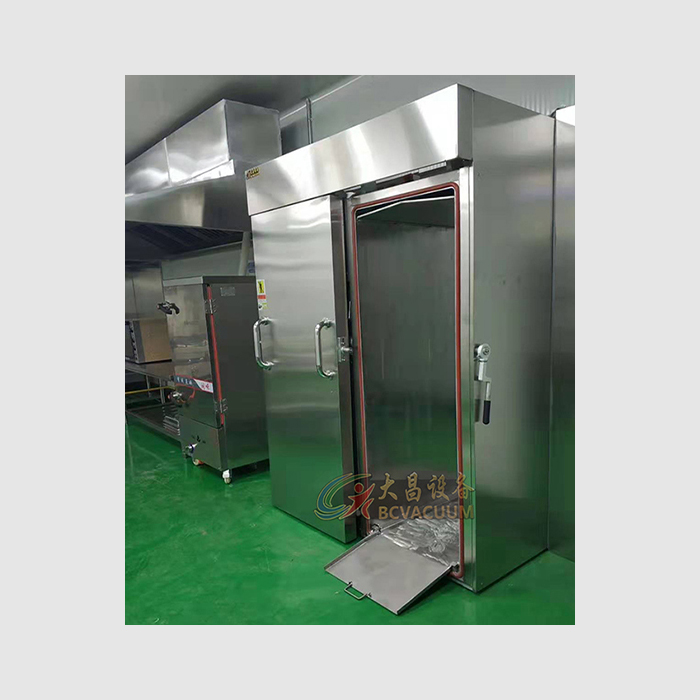
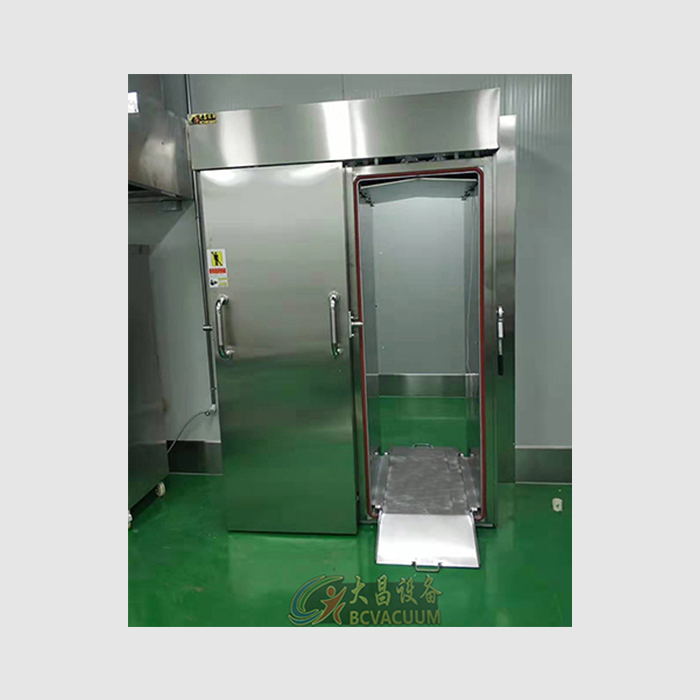
A vacuum cooler is a device used in industries such as food, medicine, and chemical. It uses a vacuum pump to extract air from a sealed container, thereby reducing the pressure and temperature inside the container and achieving cooling or pre cooling of materials. The advantage of a vacuum cooler is that it can quickly cool down, keeping materials fresh and of stable quality, while also reducing energy consumption and shortening production cycles. The specific usage methods and precautions are as follows:
1. Before use, check whether all components of the vacuum cooler are intact, such as the vacuum pump, sealing ring, temperature controller, etc. If there are any problems, they should be repaired or replaced in a timely manner.
2. Before using a vacuum cooler, the material should be placed in a sealed container and the air inside the container should be expelled. At this time, attention should be paid to the sealing of the container to prevent air leakage.
3. Start the vacuum pump and start vacuuming. When the vacuum degree reaches the required level, start adding coolant and control the flow and temperature of the coolant according to the temperature of the material and cooling requirements.
4. During the entire cooling process, it is necessary to closely observe the temperature changes and vacuum degree changes of the material to ensure the cooling effect and normal operation of the equipment.
5. After use, all components of the vacuum cooling machine should be cleaned in a timely manner to keep the equipment clean and dry for future use.
Attention: When using a vacuum cooling machine, it is necessary to follow the user manual and safety operating procedures provided by the manufacturer to prevent equipment failure and personal injury accidents.
Principle
The principle of a vacuum cooler is to use a vacuum pump to extract gas from the vacuum chamber, thereby reducing the pressure inside the vacuum chamber. In this low-pressure environment, the water in fruits and vegetables will quickly evaporate, absorbing a large amount of heat during the evaporation process, thereby reducing the temperature of fruits and vegetables. This cooling method can quickly cool fruits and vegetables in a short period of time, thereby achieving the effect of preservation.
function
The main features of the "vacuum precooler" are:
1. Fast cooling speed, processing "fruits and vegetables", usually reaching around 5 ℃ in about 30 minutes;
2. The cooling is uniform, and the surface moisture of freshly cut or picked items (such as chives) is vaporized to remove the heat from the field, achieving the purpose of cooling. Vacuum cooling is 20 times faster than natural cooling under the same conditions, and about 12 times faster than blower cooling, with improved efficiency. It is very beneficial for the industrial production of cooked meat products and ensures the core competitiveness of food: taste and cost. The traditional cooling methods are natural cooling or cold storage cooling. Traditional cooling methods have long cooling times, large temperature differences between inside and outside, and are prone to causing "secondary pollution" and excessive bacteria in food. Vacuum rapid cooling is a rapid evaporative cooling technology.
Production process flow
The production process of vacuum cooling machine includes the following steps:
1. Raw material preparation: Prepare materials that require cooling, such as food, chemical raw materials, etc.
2. Pre cooling: Place the material into a vacuum chamber and use a vacuum pump to extract the air from the chamber, creating a vacuum state. At the same time, the heater pre cools the materials inside the vacuum chamber.
3. Cooling: The pre cooled material can be cooled using methods such as water cooling or air cooling.
4. Drying: Drying the material in a vacuum state to reduce the moisture content in the material.
5. Packaging: Packaging the dried material for easy storage and transportation.
6. Finished product inspection: Inspect the packaged finished products to ensure their quality is qualified.
7. Warehousing: Put the finished products that have passed inspection into the warehouse and prepare them for outbound sales.
It should be noted that different materials and application scenarios require different production processes and equipment configurations. Therefore, when designing and manufacturing vacuum cooling machines, customized design and production should be carried out according to specific situations.
Advantages and disadvantages of vacuum cooling machine
The advantages of vacuum cooling machines include:
1. Good cooling effect: By cooling and drying under vacuum, the temperature and moisture content of the material can be effectively reduced, allowing it to better maintain its original properties and quality.
2. High production efficiency: Vacuum cooling machines can continuously produce with high production efficiency, meeting the needs of large-scale production.
3. Energy saving and environmental protection: During the operation of the vacuum cooling machine, it can effectively reduce the oxygen and moisture in the air, avoid material oxidation and deterioration, and also reduce energy consumption and exhaust emissions, with good environmental protection effects.
The disadvantages of vacuum cooling machines include:
1. High equipment investment: The equipment investment for vacuum cooling machines is relatively high, including multiple components such as vacuum pumps, heaters, and coolers, which require high technical and equipment support.
2. High maintenance cost: The maintenance cost of vacuum cooling machines is also high, requiring regular inspection and maintenance of components such as vacuum pumps and heaters to ensure the normal operation of the equipment.
3. High material requirements: Vacuum cooling machines are suitable for materials with high temperature and moisture requirements, but may not be suitable for some materials with low temperature and moisture requirements.
Equipment Parameters
The parameters of vacuum cooling equipment include the following aspects:
1. Vacuum degree: Vacuum degree is an important parameter of a vacuum cooler, which represents the pressure level inside the vacuum chamber, generally expressed in Pa or kPa. The higher the vacuum degree, the lower the air pressure inside the vacuum chamber, which is more conducive to the cooling and drying of materials.
2. Volume: The volume of a vacuum cooler refers to the volume of material that can be accommodated in the vacuum chamber, usually expressed in L or m ³. The larger the volume, the more materials can be accommodated, but at the same time, the volume and weight of the equipment will also increase.
3. Power: The power of a vacuum cooler refers to the electricity consumption required by the equipment, generally expressed in kW or W. The higher the power, the stronger the cooling and vacuuming capabilities of the equipment.
4. Temperature range: The temperature range of a vacuum cooler refers to the temperature range of materials that the equipment can control, generally expressed in degrees Celsius. The wider the temperature range, the more suitable the equipment can be for a wider variety of materials.
5. Control mode: The control mode of the vacuum cooling machine includes manual control and automatic control. Automatic control can achieve control functions such as constant temperature, constant pressure, and constant current, improving the efficiency and stability of the equipment.
It should be noted that different application scenarios require the selection of vacuum coolers with different parameters. Therefore, when selecting equipment, it is necessary to choose and configure according to specific process requirements and material characteristics.



 XML
XML