
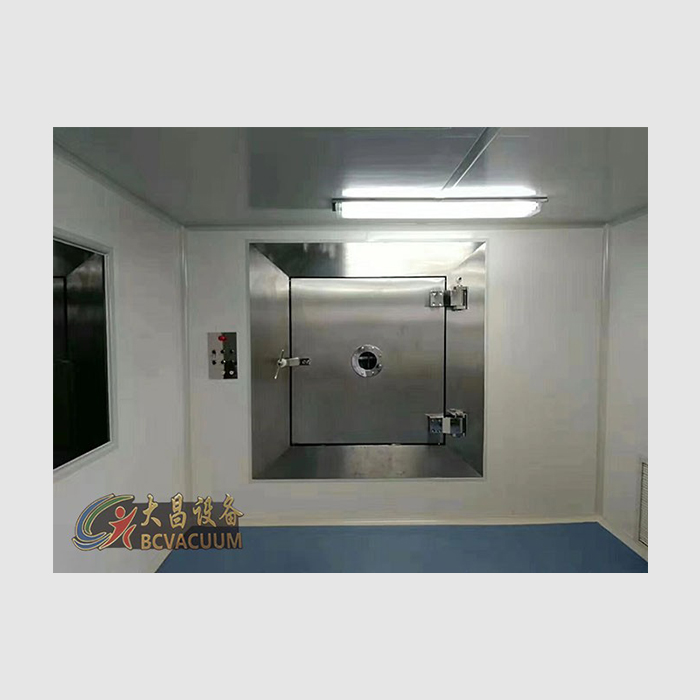
Pharmaceutical freeze-drying machine
-
Model/Taiwan
DCYYDG
-
Specifications/Item
Depending on the on-site situation
-
price/Item
Subject to consultation
-
Material/Batch
Stainless steel material+carbon steel
-
Product Introduction
-
Working Principle
-
Features
-
Scope of application
Overview
A pharmaceutical freeze-drying machine is a device used for preparing and drying drugs. Its working principle is to freeze the drugs to a temperature below their freezing point, and then dry them in a vacuum environment, causing the moisture in the drugs to evaporate through sublimation, ultimately obtaining dried drugs.
component
Pharmaceutical freeze-drying machine is a widely used equipment in the field of medicine, used to dry liquid drugs or biological products into solid drugs or products, with advantages such as high efficiency, safety, and stability. The components of a pharmaceutical lyophilizer usually include the following parts:
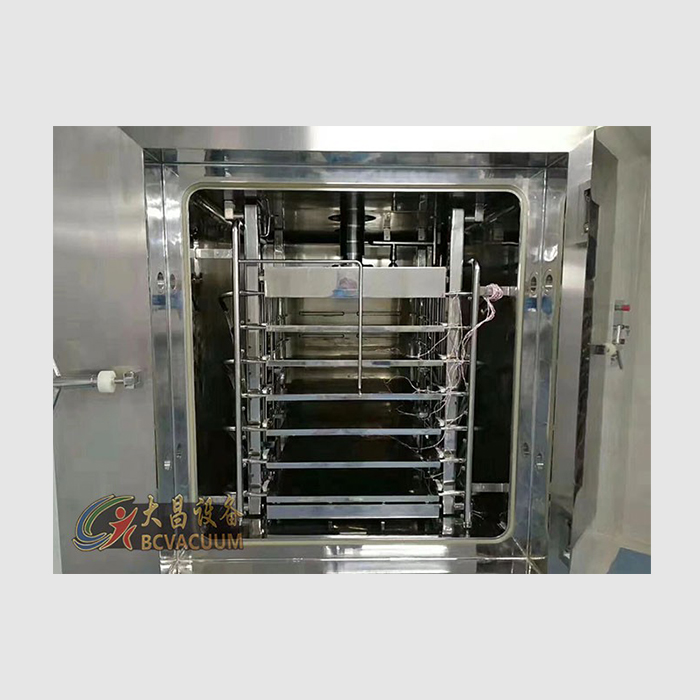
1. Freeze drying box:The freeze-drying box is the core component of a pharmaceutical freeze-drying machine, used to store drugs or products to be dried. It usually has several shelves inside, which can dry multiple items at the same time. The shell of the freeze-drying box is usually made of materials such as stainless steel, which has good anti-corrosion performance.
2. Heating and cooling system:The heating and cooling system is a key component of the pharmaceutical freeze-drying machine, used to control the temperature of the freeze-drying box. Heating systems typically use heating elements such as heaters or electric heating tubes, while refrigeration systems typically use cooling elements such as compression refrigerators. By using heating and cooling systems, the temperature of the freeze-drying oven can be controlled within an appropriate range to ensure the drying quality of drugs or products.
3. Vacuum system:The vacuum system is an important component of the pharmaceutical freeze-drying machine, used to extract air from the freeze-drying chamber and create a vacuum environment. Vacuum systems typically include equipment such as vacuum pumps, vacuum valves, and vacuum gauges. Through a vacuum system, the air pressure inside the freeze-drying box can be reduced to the required level to ensure the drying quality of drugs or products.
4. Control system:The control system is the control center of the pharmaceutical freeze-drying machine, used to monitor and control the entire freeze-drying process. Control systems typically include devices such as temperature controllers, vacuum controllers, humidity controllers, pressure controllers, etc. Through the control system, the temperature, humidity, pressure and other parameters of the freeze-drying oven can be monitored and controlled in real time to ensure the drying quality of drugs or products. Other components of the pharmaceutical freeze-drying machine include a plate layer thermal fluid circulation heating and cooling system, a water vapor condenser and condenser cooling system, and a vacuum drying machineAir extraction and vacuum control system, CIP system, SIP system, hydraulic system, control system, etc. These components work together to form the efficient, safe, and stable medical freeze-drying machine.
Working Principle
A pharmaceutical freeze-drying machine is a device used to remove moisture from drugs through freezing and vacuum drying processes. Its working principle is to freeze the drug solution in a low-temperature environment, then sublimate and dry it under vacuum conditions to remove ice crystals. After sublimation is complete, it is then subjected to desorption drying to remove some bound water. Specifically, the working process of the pharmaceutical freeze-drying machine is as follows:
1. Inject the drug solution into the freeze dryer and freeze it in a low-temperature environment to form solid ice crystals.
2. During the freezing process, the freeze dryer freezes all the water in the drug solution, forming solid ice crystals.
3. When the temperature of the drug solution drops below freezing point, ice crystals begin to sublime, separating water from the drug solution. The water vapor generated by sublimation is extracted by a vacuum pump.
4. After the sublimation is completed, the water in the drug solution has been basically removed. At this time, desorption drying can be carried out to further remove the remaining water in the drug solution.
5. Finally, the pharmaceutical solution is cooled to room temperature through air or water cooling, completing the working process of the pharmaceutical freeze-drying machine. The working principle of a pharmaceutical freeze-drying machine is to use low temperature and vacuum conditions to separate the moisture in the drug from the solution. Through this method, the stability and quality of the drug can be effectively improved. Pharmaceutical freeze-drying machines are widely used in fields such as pharmaceuticals, biological products, and medical devices.
We have briefly introduced the introduction, functions, principles, and components of the pharmaceutical freeze-drying machine here. If you need to know more about ordering equipment, please contact us.
A pharmaceutical freeze-drying machine is a device used to remove moisture from drugs through freezing and vacuum drying processes. Its working principle is to freeze the drug solution in a low-temperature environment, then sublimate and dry it under vacuum conditions to remove ice crystals. After sublimation is complete, it is then subjected to desorption drying to remove some bound water. Specifically, the working process of the pharmaceutical freeze-drying machine is as follows:
1. Inject the drug solution into the freeze dryer and freeze it in a low-temperature environment to form solid ice crystals.
2. During the freezing process, the freeze dryer freezes all the water in the drug solution, forming solid ice crystals.
3. When the temperature of the drug solution drops below freezing point, ice crystals begin to sublime, separating water from the drug solution. The water vapor generated by sublimation is extracted by a vacuum pump.
4. After the sublimation is completed, the water in the drug solution has been basically removed. At this time, desorption drying can be carried out to further remove the remaining water in the drug solution.
5. Finally, the pharmaceutical solution is cooled to room temperature through air or water cooling, completing the working process of the pharmaceutical freeze-drying machine.
Pharmaceutical freeze-drying machine (pharmaceutical freeze-drying machine) is a key equipment used in the pharmaceutical industry for freeze-drying drugs. Its core function is to remove moisture while protecting the active ingredients of drugs through low-temperature freezing and vacuum sublimation technology, achieving long-term stable storage of drugs. The following are its main functional features:
1. Accurate process control capability
Multi stage program control: supports independent parameter settings (such as temperature, vacuum degree, time) for pre freezing, sublimation drying, and analytical drying stages to meet the process requirements of different drugs.
Eutectic point test: Automatically detect the eutectic point of the material to ensure that the pre freezing temperature is lower than the eutectic point, avoiding drug crystallization and structural damage.
Accurate temperature control: using thermal conductive media (such as silicone oil) or shelf heating/cooling systems to achieve temperature accuracy of ± 1 ℃ and ensure the stability of the freeze-drying curve.
2. Comply with GMP and regulatory requirements
Aseptic design: Fully enclosed chamber, smooth inner wall without dead corners, supports online sterilization (SIP) and cleaning (CIP), reducing the risk of contamination.
Verification support: Equipped with IQ/OQ/PQ verification file packages, in compliance with international standards such as FDA and EU GMP, facilitating enterprise compliance.
Data traceability: Electronic record and audit tracking function, meeting electronic data regulatory requirements such as 21 CFR Part 11.
3. Efficient energy conservation and environmental protection
Efficient condensation system: using silicone oil condenser or mixed condensation technology (such as ice cream+silicone oil) to improve water vapor capture efficiency and shorten drying time.
Energy saving design: Technologies such as heat recovery systems and variable frequency vacuum pumps reduce energy consumption, in line with the trend of green production.
Environmentally friendly refrigerants: Use low GWP refrigerants (such as R507) to reduce carbon emissions.
4. Automation and Intelligence
Fully automated operation: The entire process from feeding to discharging is automated, reducing manual intervention and improving batch consistency.
Intelligent monitoring: Real time display of key parameters (temperature, pressure, vacuum degree), abnormal alarm and automatic shutdown function.
Remote management: Supports SCADA or Industry 4.0 interfaces to achieve remote monitoring and data analysis.
5. Safety and reliability
Explosion proof design: Complies with ATEX standards and is suitable for freeze-drying organic solvent drugs.
Redundancy protection: Equipped with dual vacuum pumps, backup power supply, etc., to ensure production continuity.
Emergency stop: a safety interlock device that quickly stops operation in case of abnormal conditions.
6. Flexibility and Scalability
Modular design: supports multiple shelf and manifold configurations, adapting to the expansion needs from laboratory research and development to large-scale production.
Customized service: Freeze drying solutions can be customized based on the characteristics of drugs, such as biological products, injections, and vaccines.
7. Material and hygiene standards
316L stainless steel: The contact surface is made of medical grade stainless steel, which is corrosion-resistant and easy to clean.
Smooth surface treatment: no welds, no dead corners design, to avoid microbial growth.
8. Data recording and reporting
Electronic batch record: Automatically generate batch reports, including key parameters such as time, temperature, pressure, etc., for easy traceability.
Process optimization: Through historical data analysis, optimize the freeze-drying curve to improve efficiency and drug quality.
The pharmaceutical freeze-drying machine (freeze dryer) has a wide range of applications in the pharmaceutical field, and its core advantage lies in protecting the active ingredients of drugs through low-temperature dehydration technology, extending the shelf life, and maintaining a sterile state. The following are its main application scope and specific scenarios:
1. Biological products
Vaccines: such as Xinguan mRNA vaccine and influenza vaccine, the freeze-drying process can avoid high temperature inactivation and ensure the stability of antigens.
Monoclonal antibodies (mAbs), such as trastuzumab and pembrolizumab used for cancer treatment, are easy to store and transport for a long time after freeze-drying.
Cytokines and recombinant proteins, such as interferon and growth hormone, can maintain their biological activity through freeze-drying.
Gene therapy products: such as adeno-associated virus (AAV) vectors, CAR-T cell preparations, etc., low-temperature drying reduces damage to active cells or viral particles.
2. Injection preparations
Freeze dried powder injections: antibiotics (such as cephalosporins), antiviral drugs (such as acyclovir), anti-tumor drugs (such as paclitaxel), etc., to avoid instability in liquid formulations.
Liposomes and nanoparticles: such as doxorubicin liposomes and paclitaxel albumin nanoparticles, freeze-drying technology can maintain their particle size distribution and drug release characteristics.
Microspheres and implants, such as leuprorelin microspheres, maintain sustained release structural integrity after freeze-drying.
3. Active pharmaceutical ingredients (API)
Thermally sensitive active pharmaceutical ingredients, such as protein, peptide, and nucleotide drugs, should avoid denaturation or decomposition caused by high temperature drying.
Aseptic raw materials: APIs directly used in the production of sterile preparations, without the need for secondary sterilization after freeze-drying.
4. Diagnostic reagents and biological samples
In vitro diagnostic reagents: such as standard and quality control samples in enzyme-linked immunosorbent assay kits, which are easy to transport and store in cold chain after freeze-drying.
Clinical sample preservation: such as serum, plasma, and cell samples, used for scientific research or clinical testing.
5. Biotechnology products
Cell and gene therapy products, such as mesenchymal stem cells, induced pluripotent stem cells (iPSCs), and freeze-drying technology provide long-term preservation solutions for cell therapy.
MRNA and nucleic acid drugs, such as small interfering RNA (siRNA) and antisense oligonucleotides (ASO), can enhance stability through freeze-drying.
6. Special dosage forms
Oral disintegrating tablets: porous structures are prepared through freeze-drying technology to achieve rapid dissolution.
Inhalation preparations: such as freeze-dried powder inhalers (such as budesonide), ensuring the dispersibility and stability of drug particles.
7. Probiotics and Microbial Preparations
Probiotic freeze-dried powder: such as Bifidobacterium and Lactobacillus, maintains strain activity and extends shelf life.
Microbial diagnostic reagents: such as standard strains used for bacterial and viral detection.
8. Clinical trial samples
New drug development stage samples: support drug stability research, facilitate analysis and comparison of samples from different batches.
9. Application scenario extension
Disaster emergency drug reserve: Freeze dried drugs do not require cold chain and are suitable for remote areas or emergency scenarios.
Combination drugs: such as multi-component vaccines or compound preparations, freeze-drying can avoid reactions between the components.
- Introduction to Vacuum Pre cooling Machine
- Introduction to Archive Insecticidal Disinfection Machine
- Introduction to equipment for thawing frozen meat
- Introduction to Freeze Drying Machine
- Introduction to Equipment for Restoration of Cultural Relic Archives
- Introduction to Low Oxygen Insecticidal Storage Cabinet
Consultation Hotline
0797-8113123
地址:No.4, Guandao Ping Road, Zhanggong District, Ganzhou City, Jiangxi,China
Phone: 13507078327
Email: info@xshiyu.com

Add WeChat
Main products: Vacuum pre cooling equipment, archive insecticidal disinfection and sterilization equipment, vacuum freeze dryer, thawing equipment, cultural relic archive image restoration equipment, low oxygen insecticidal disinfection machine, vacuum deodorization machine, dust removal disinfection and purification equipment, ultra-high pressure sterilization equipment, low oxygen chamber animal comfort equipment
Copyright © 2026 Dachang Equipment Equipment All rights reserved. XML
XML