Thermal Vacuum Test System / Outer Space Test Chamber
Introduction
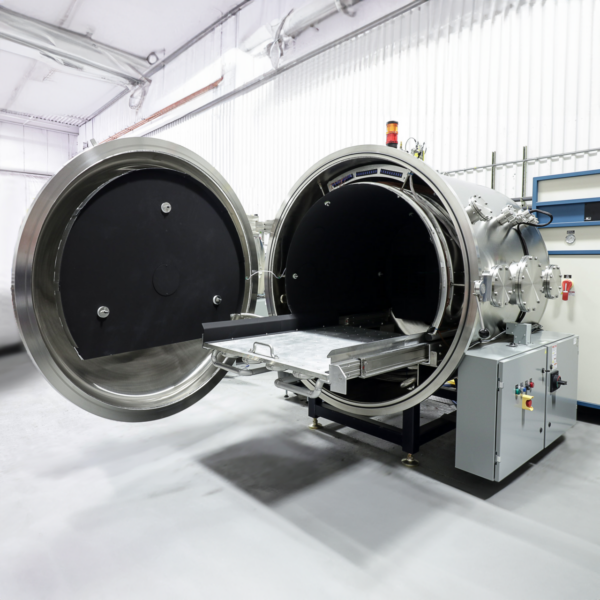
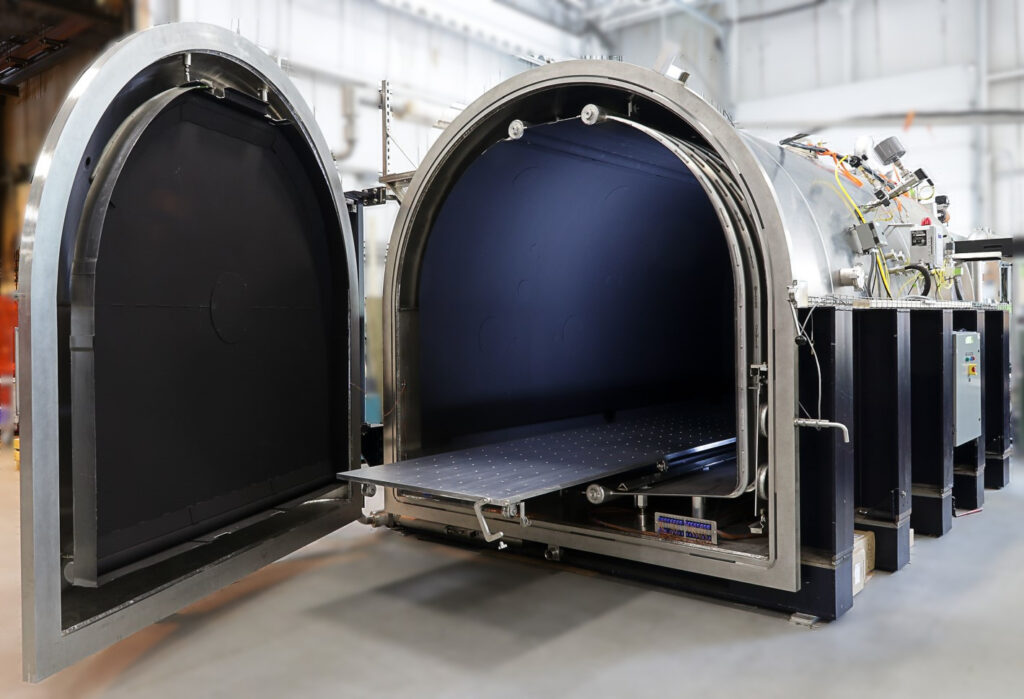
Basic Lunar Environment Simulator System is designed for pumping out using a single turbo pump, has one door for servicing and installing and replacing samples and a platform for fixing samples, heating and cooling them. This design allows you to increase the size of the vacuum chamber, install a second door on it, additional testing equipment and an additional turbopump. The system is designed to use a standard lunar soil/lunar dust simulant.
1. Cylindrical Technical Parameters
Model No | TVC-500 | TVC-1200 | TVC-3600 | TVC-10000 | TVC-100CBM | TVC-300CBM |
Working Diameter(mm) | 500 | 1200 | 1500 | 2000 | 2500~17000 | 3000~17000 |
Working Length(mm) | 500 | 1500 | 2000 | 3000 | 5000~300,000 | 6000~300,000 |
General Technical Specifications (Cylindrical)
Vacuum Limit (Option) | 3kPa, 1kPa, 10Pa, 133Pa, 0.000001Pa, -0.1MPa, 0.001mmHg, 0.05Torr, 1*10-5Pa, 1*10-6Pa, 1*10-7Pa, 1*10-9Torr, 1*10-9mbar |
Temperature Range /℃ | -259℃ to 3000℃ (Depending on configuration options) |
Refrigerating Method | Liquid Nitrogen, Liquid Helium, Liquid refrigerant, Refrigerating machine, Nitrogen gas temperature, Bath oil temperature, Imported compressor, Silicone Oil, etc. |
Infrared heating mode | Infrared heating array, Infrared heating cage, SUS316L Stainless Steel Heater, GN2 Heating System, Silicone Oil Heating System, etc. |
Irradiance | UV/VUV radiation (120–400nm), AO flux, and charged particle bombardment to simulate 10+ years of LEO/GEO degradation |
Irradiation way | Solar simulator, Ultraviolet irradiation simulator, Lighting environment simulation system |
Dust System | Dust Source, Lunar Dust Filtering System, Dust Cleaning System, etc. |
Power Supply | AC 3Ψ 220V±10%; 3Ψ 380V±10%; 3Ψ480V±10%+N+G, 60/50Hz |
Customized Service | Welcome to custom size, Non-standard, Special requirements, OEM/ODM orders. |
2. Box Type Technical Parameters
Model No | TVC-500 | TVC-600 | TVC-800 | TVC-1000 | TVC-2000 | TVC-8000 |
Volume(L) | 125 | 216 | 512 | 1000 | 2000 | 8000 |
Inner chamber size(mm) W*H*D | 500*500*500 | 600*600*600 | 800*800*800 | 1000*1000*1000 | 1200*1200*1200 | 2000*2000*2000 |
General Technical Specifications (Box Type)
Vacuum Limit (Option) | 3kPa, 1kPa, 10Pa, 133Pa, 0.000001Pa, -0.1MPa, 0.001mmHg, 0.05Torr, 1*10-5Pa, 1*10-6Pa, 1*10-7Pa, 1*10-9Torr, 1*10-9mbar |
Temperature Range /℃ | -259℃ to 3000℃ (Depending on configuration options) |
Refrigerating Method | Liquid Nitrogen, Liquid Helium, Liquid refrigerant, Refrigerating machine, Nitrogen gas temperature, Bath oil temperature, Imported compressor, Silicone Oil, etc. |
Infrared heating mode | Infrared heating array, Infrared heating cage, SUS316L Stainless Steel Heater, GN2 Heating System, Silicone Oil Heating System, etc. |
Irradiance | UV/VUV radiation (120–400nm), AO flux, and charged particle bombardment to simulate 10+ years of LEO/GEO degradation |
Irradiation way | Solar simulator, Ultraviolet irradiation simulator, Lighting environment simulation system |
Dust System | Dust Source, Lunar Dust Filtering System, Dust Cleaning System, etc. |
Power Supply | AC 3Ψ 220V±10%; 3Ψ 380V±10%; 3Ψ480V±10%+N+G, 60/50Hz |
Customized Service | Welcome to custom size, Non-standard, Special requirements, OEM/ODM orders. |
📋 Frequently Asked Questions (FAQ)
Q1: What is the typical lead time for a custom Thermal Vacuum Chamber (TVAC)?
A: As a direct manufacturer, our standard lead time ranges from 60 to 120 working days, depending on the chamber volume, thermal range, and vacuum pump configurations. We provide end-to-end OEM/ODM services, from customized CAD engineering to final factory acceptance testing (FAT).
Q2: How does the TVAC system achieve ultra-high vacuum for deep space simulation?
A: We utilize a highly efficient multi-stage vacuum pumping system. By integrating rotary vane roughing pumps with high-performance turbomolecular or cryogenic pumps, our chambers can reliably evacuate down to an ultimate vacuum level of $1.0 \times 10^{-5}$ Pa. This accurately simulates the extreme low-pressure environments of Low Earth Orbit (LEO) and deep space.
Q3: How is temperature regulated when there is no air inside the vacuum chamber?
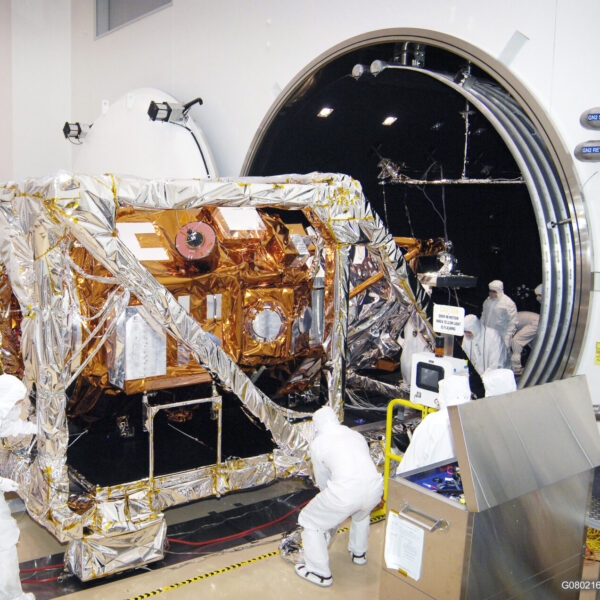
A: Because convective heat transfer is impossible in a vacuum, our TVAC systems utilize a specialized internal thermal shroud. By circulating Liquid Nitrogen (LN2) for deep cooling and utilizing electric heaters or thermal fluids for heating, the shroud transfers thermal energy to the test object purely through thermal radiation. This ensures highly precise and uniform temperature cycling, typically from -150°C to +150°C.
Q4: How does the equipment handle outgassing from satellite components or composite materials?
A: To minimize background outgassing, the chamber's interior is constructed from highly polished SUS304 or SUS316L stainless steel. For testing materials with high outgassing rates, our systems can be equipped with high-capacity cryogenic cold traps designed to rapidly capture moisture and volatile organic compounds (VOCs), maintaining vacuum stability during prolonged reliability tests.


 XML